What a septic inspection covers when you buy a home
What the inspector looks at, in what order, and what the findings mean for your offer.
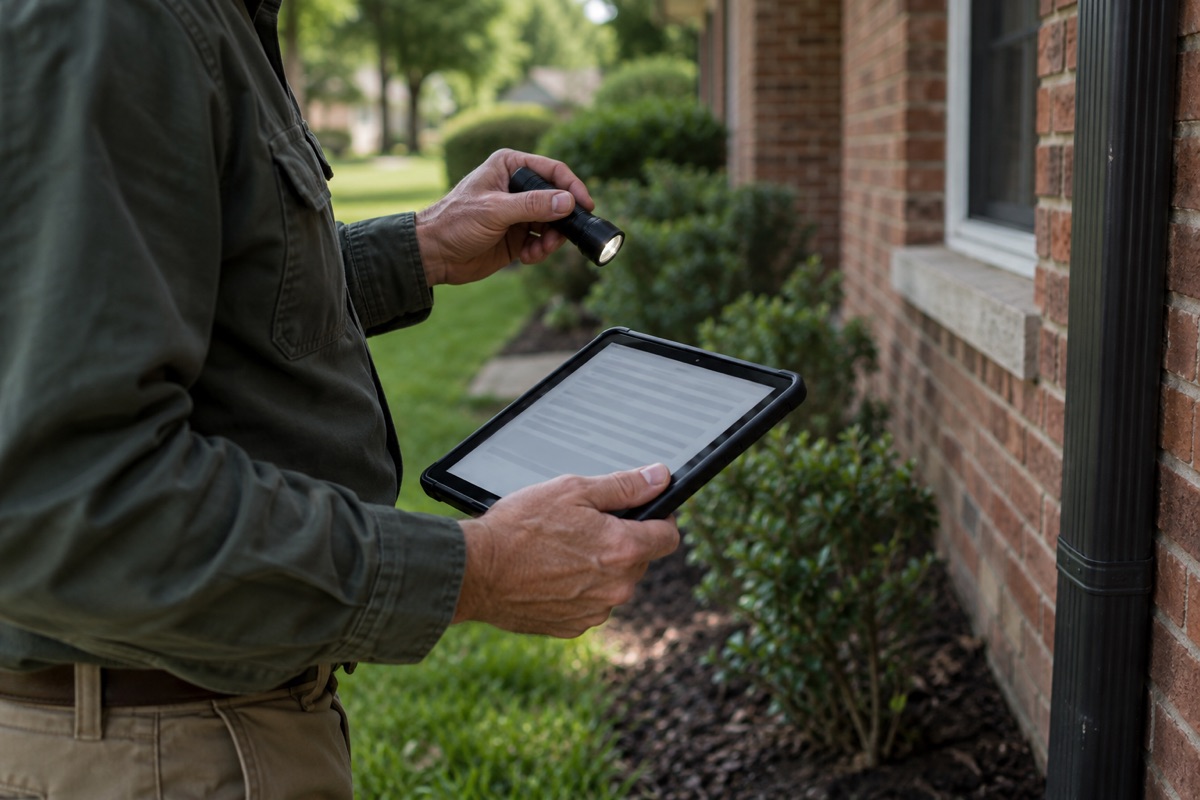
A general home inspection covers the roof, the furnace and the outlets. It usually doesn't cover what's buried in the yard. If the house you're buying has a septic system, that's a separate inspection and it's worth scheduling early.
The EPA's New Homebuyer's Guide to Septic Systems puts it bluntly: like a furnace, a septic system is expensive to repair or replace, so you want it in good condition when you buy. It recommends having a septic service provider inspect the system before you purchase. Inspections may also be required by local or state government or by your mortgage lender, so ask your lender early.
First, find out if the house has one
You most likely have a septic system if the house is on well water, the water line coming in has no meter, the neighbors have septic systems, or you live in a rural area. The EPA also suggests checking the yard for inspection caps, lids or manhole covers, and asking the seller or the agent.
What the inspector checks
The EPA's guide lists what should happen during an inspection. The inspector checks:
- Pumping and maintenance records.
- The age of the system.
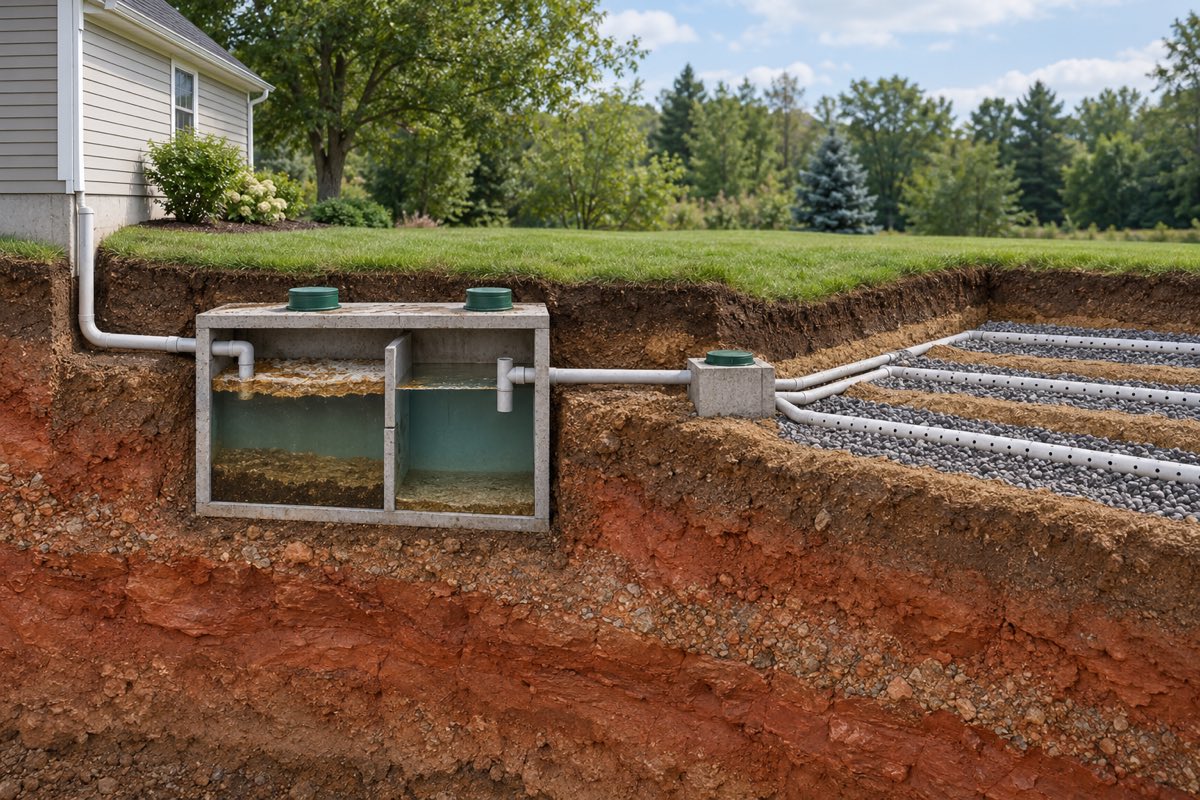
- Sludge levels and scum thickness in the tank.
- Signs of leakage, such as low water levels in the tank.
- Signs of backup, such as staining in the tank above the outlet pipe.
- The condition of the tank and the inlet and outlet pipes.
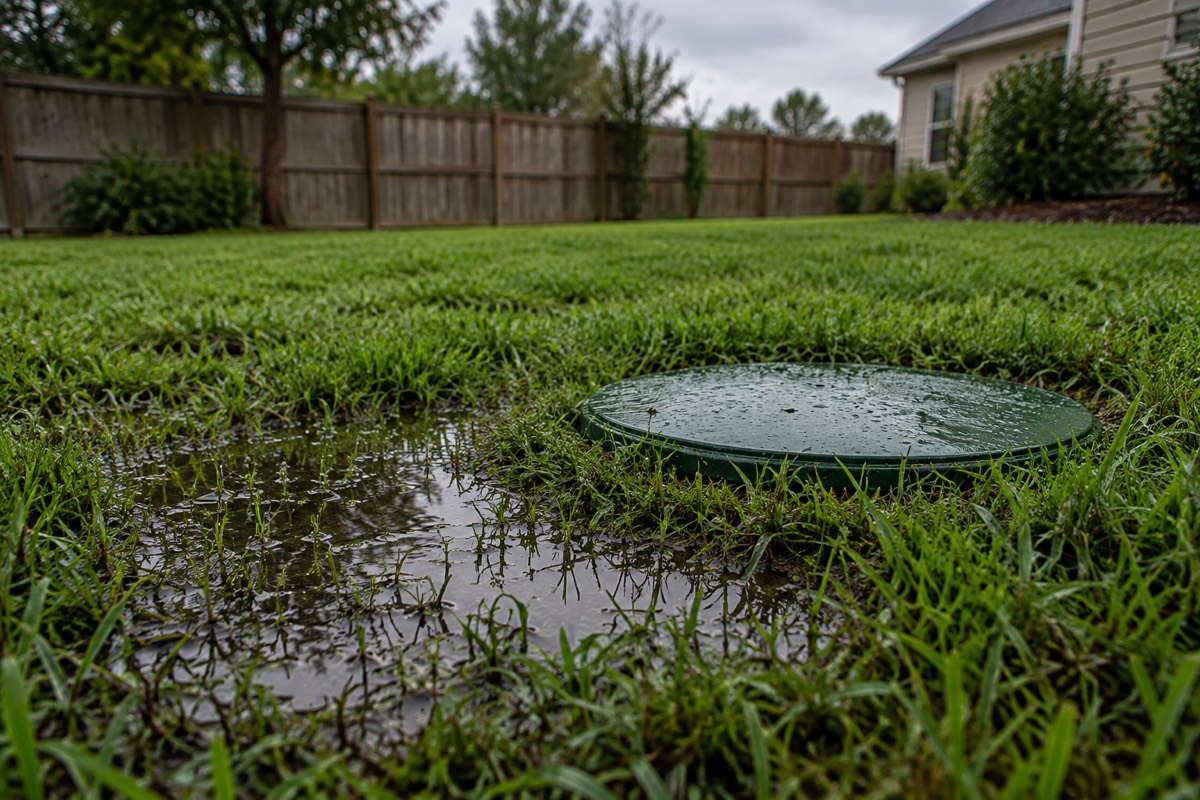
- The drain field, for signs of failure like standing water.
- The distribution box, to make sure the drain lines get equal flow.
- Available records, to confirm the system complies with local regulations on how it works and where it sits.
Here's how to read each one.
Records and age
Records tell you the system's history before anyone opens a lid. An inspector who sees regular pump-outs has a different starting point than one who finds no records at all. The EPA gives 15 to 40 years as the average life of a septic system, so age tells you roughly how much of that life is left.
Sludge and scum
This is the measurement that tells you how full the tank is. SC DES says pumping is due when solids reach one-third to one-half of the tank. If the tank is nearly full at inspection, plan on a pump-out soon. Ask whether the seller will pump it before closing, or whether you'll take that on.
Water level and staining
A low water level can mean the tank is leaking. Staining above the outlet pipe can mean wastewater backed up at some point. Neither is a final verdict by itself, but both are reasons to ask more questions.
Tank, pipes and distribution box
The inspector is looking for cracks, damaged pipes and broken fittings. SC DES lists missing, broken or worn tee fittings and baffles as one cause of system failure, so those are worth a close look. The distribution box matters because uneven flow overloads some trenches while others sit unused.
The drain field
Standing water, soft ground, odors and unusually green, spongy grass over the field all point to a system that's not working. Clemson Extension also lists broken seals at toilets and sinks and a tank visible above ground.
Questions to ask before inspection day
- Where is the tank, and where is the drain field? The EPA says the seller or the "as built" drawing from the local health department can help. SC DES says to contact its office for a permit copy if the home was built in the last 20 years, and to have a septic contractor identify the system in older homes.
- When was the tank last pumped, and can you see the invoice?
- Has the system ever backed up or been repaired?
- How many bedrooms does the permit cover, and does that match the house today? SC DES sizes systems by bedroom count.
- Is there a drinking water well, and where is it? Well and septic homes covers the distances.
Who can do the inspection
SC DES says it will not inspect an existing system on request. You'll need to hire a septic professional.
If the inspection finds a problem
You have options, and they depend on what was found. A tank that only needs pumping is a small problem you can ask the seller to cover. Damaged tees or baffles are repair items. A failed drain field is the big one: SC DES says solids clogging the gravel and soil can mean a new field is needed. The EPA says inspection results can help you decide if the home is right for you, and that includes deciding it isn't.
Don't skip the inspection to save money or time on a tight closing. Everything above is cheaper to learn before you own the house. For a longer list of what to ask, see buying a home with a septic system.